My response to the United States 2012 Census of Agriculture

Dear readers: If this sort of thing gets under your skin too - feel free to repost this! — Christy

==========================================================

January 26, 2013

United States Department of Agriculture

National Agricultural Statistics Service

1201 East 10th Street

Jeffersonville, IN 47132


RE: United States 2012 Census of Agriculture

Dear USDA –

Thank you for sending me the US 2012 Census of Agriculture survey to fill out. It is good to know that someone somewhere is collecting data regarding farming – since it is such an important part of our food system, and important to have this data.

And it was very nice to learn that if I filled out the survey online that I could skip questions that didn’t pertain.

So I set out to do just that on a cold Saturday morning in Maine, even though I suspected I wouldn’t find many of the questions relevant. Beekeeping is absolutely crucial to growing almost all food, and yet it’s been my experience that the business of a natural beekeeper doesn’t align well with any of the categories or the questions asked in an agriculture survey about farming in the US.

My suspicions were correct – the categories did not pertain. Not even the ones about beekeeping – in Section 19. Your assurance that I could skip irrelevant portions of the survey was not correct either. But the final straw, the one that convinced me to write this letter, was that when I got to the very end of the survey — after trying my best to make my beekeeping-related small business fit the categories, feeling like I was trying to fit the proverbial square peg into its round hole – the entire survey website blew up, crashed the internet browser and left me with only one option – starting over.

I’m sorry. I’m not going to do that. I’m going to offer you better, more meaningful information instead – information that you will need to incorporate into the next Census of Agriculture, due to the changes that are surely coming – and that are being caused by the way we currently grow food.

Which is where the problem begins. The way we grow food is broken. Monoculture agricultural practices, synthetic fertilizers, toxic chemical pesticides, and genetically modified crops are destroying what was formerly a natural and sustainable system.

The practice of growing thousands of acres of single crops may look to be efficient, but what use is efficiency if the practice of monoculture breaks the very system it is attempting to improve?

Chemicals are “required” in monoculture farming – not because the pests are a bigger problem than they are in organic farming, but because the imbalances inherent in a monoculture create an environment that supports the pests, and destroys the balance that would keep them in check.

Organic growing practices, and the balanced and integrated growing systems that support each other are the way forward if we are to preserve the health of the planet and the generations still to come. Don’t be confused by that mild sounding language. Here is what I just said, in plain words: If we want to stay alive – we must change the way we are growing food.

More chemicals are not the answer. Genetic modification is not the answer. Systemic pesticides are not an improved version of sprayed-on pesticides. The use of chemical inputs is not improving anything – it is only poisoning the planet, our children, and us. Again, don’t be confused by the mild language – these things are killing the earth and killing us. Slowly perhaps, certainly much more slowly than the gun problem we seem to have here in the US – but in the end we will all be just as dead. Is “Big Ag” too blind to see this?

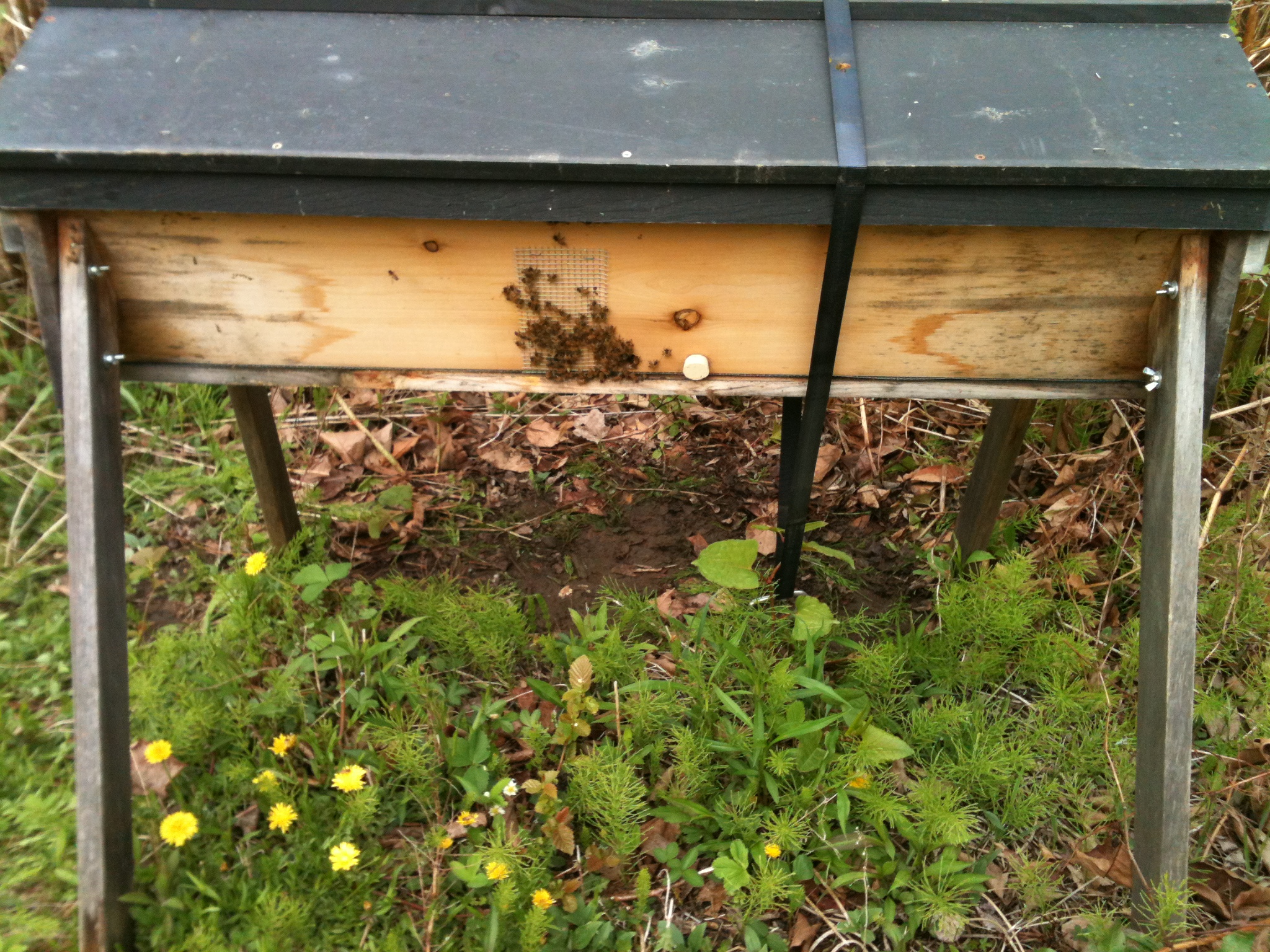
My business, Gold Star Honeybees works to support natural backyard beekeeping with quality beekeeping equipment, and good information. So I build top bar beehive kits, I teach classes across the United States, and I authored a book called The Thinking Beekeeper that contains the information I teach in the class. I run a beekeeping business that does not lease huge tracts of land, does not hire large numbers of people, does not truck bees around the country, does not process and sell vast quantities of honey, and does not pour synthetic fertilizers on the land. It seems, based on your survey that if I am not doing those things, I am not involved in agriculture.

And yet without naturally raised bees – pollinating organically grown food - what will happen to farming? What will happen to our ability to grow food? The current system is currently taking us down a road to hell… do we have to get all the way into the fire and brimstone before we think to make a change?

But… attempting to be a law-abiding citizen, here are my responses to the survey:

Section 19:

Question 1 – Yes, this operation owned bees in 2012.

Question 2 – I kept 5 top bar hives.

To the best of my knowledge they were all still alive on December 31, 2012. (You do understand that you don’t see your bees when it’s below 48 degrees, don’t you?)

I think I collected approximately 30 pounds of honey. (I don’t keep close track.)

But the dollar figure to enter under “Value of Sales of honey “ – that’s an interesting question. I did not sell any of my honey – I kept it for my own use. It’s very good medicine for my pollen allergies – did you know that? Such honey is priceless. It is the only honey I can get that I know was produced locally so that it contains the pollen to which I am allergic, and that was made by chemical free bees, living on their own clean, natural wax.

Maybe it’s just the beekeeping portion of the survey – Section 19 - that needs to be revised. You may not be aware of it yet but there is a paradigm shift occurring in the bee world just like there is in the organic food world – away from the use of chemical pesticides and artificial inputs, and toward the restoration of a system that wasn’t broken before we humans (with our big brains and our opposable thumbs) tried to fix it.

But I think it’s far more likely that the whole agricultural system, and the whole agriculture survey, needs revision. I hope we as a country, choose to make the changes we need to make before it’s too late and there is nothing left to save - and no way to grow safe, healthy food.

Sincerely,

Christy Hemenway, Founder
Gold Star Honeybees
PO Box 1061
Bath, ME 04530
207-449-1121
www.goldstarhoneybees.com

It’s not about the honey, Honey! It’s About the Bees!

Back in the early days of Gold Star Honeybees, when it was a beekeeping service, before I offered the first Gold Star Deluxe model top bar hive for sale, I had some t-shirts printed up, as many enthusiastic entrepreneurs are wont to do. On the front the shirts said, “It’s not about the honey, Honey” – and on the back they said, “It’s about the bees!”

When talking about a super organism (and what is a hive of bees if not a super organism?) it can be difficult to get far enough away from the subject to get the kind of perspective on it that is broad enough to see all the parts. You get a case of that “can’t see the forest for the trees” thing going on. So I had some people say to me… “What? How can bees not be about honey?”

Well, as it turns out – there are three very important things that bees are about - and that they do without any encouragement from us at all:

Thing One: Bees make more bees. Bees do this amazing thing called “swarming” – a little bit scary, a little bit magic. It’s a bit like cell division, a process involving the entire hive. It’s nothing like when a mommy dog and a daddy dog get together, and then you get little dogs. Bees just don’t work like that. They reproduce the entire colony at one shot - at the hive level. If they weren’t able to do this – we’d likely be all out of bees by now, with the problems bees have had over the years, thanks to us humans.

Thing Two: Bees pollinate a lot of the food we eat. That means: fruit, vegetables, herbs, nuts… if we didn’t have those foods, we would have only oatmeal, bread, essentially, grain or “gruel”, if you will. What about meat, you ask? If nobody’s pollinating the alfalfa – what’s a cow to eat? (It’s all connected remember? Oh wait, that’s another blog post…)

Thing Three: Bees make honey. Oddly enough, honey is what honeybees EAT! And bees are pretty smart about that – they know to be industrious and make honey while the sun is shining – in preparation for times when there isn’t any other food. That’s what they are spending their time doing when you’re watching them – that, and pollinating, and getting ready to make more bees.

So the upshot of the whole conversation is that if you’ve got healthy honeybees – there will be some honey! It’s all part of the natural system that goes on inside a beehive. But it has to start with the bees.

Healthy bees do all the important things that bees do without any coaxing or cajoling or forcing or manipulating. So it would seem that the important thing for us humans to do would be to focus on healthy honeybees.

So you could say it IS about the honey, Honey. But only AFTER it’s about the bees.

Bottle of honey

How to Get Bees Into Your Top Bar Hive

THINGS YOU DO WANT:

A swarm. The beautiful thing about a swarm is that swarming is the natural reproduction Collecting a fantastic swarm!process of honeybees. That means that the bees in a swarm are a finely tuned, well-organized “colony”. The bees are the right ages for the tasks they will be performing in their new home when it is found, and they are all related to each other, and they are all related to their queen. This is about as close to natural as you could ask for!

A swarm’s ability to build wax and fill your top bar hive with honeycomb is just amazing!

HOWEVER - The difficulty with starting your hive with a swarm is that you cannot predict its arrival time - or even if a swarm will come your way at all. You might say that they are a “gift of nature.”

Or a package. A package of bees has advantages for the beekeeper. You can “order” a package. So you know you’ve got bees coming, and when.

While not the most natural method, at least you know when it’s expected to arrive.

A beautiful package of bees!

A drawback of package bees is that they likely have not had the best time of it just before they come to live in your top bar beehive. They are bees of random ages, tumbled together with bees from many other hives in an apiary - they are unrelated, disorganized, and expected to get on with an artificially raised queen that they have never met before.

The package process is an artificial process and not so good for bees, but they seem to be able to adapt and overcome, and organize themselves into a colony and go forward. Our goal is to offer you the very best, healthiest package bees with emphasis on natural cell size and treatment-free management.

So - with those options to consider – you can now make a choice. Swarm or Package?

Start your top bar hive off right - download our free Hive Start-up Handbook here.

We will be selling package bees in 2013. Joining our newsletter will get you the information as soon as it posts: http://bit.ly/GSHNewsletter

THINGS YOU DON’T WANT:
Now, let’s talk about nucs. Just what is a nuc in the bee world? A nuc is the No Nukes!nickname given to a “nucleus colony”. It works like this - you buy a nuc, which is like a little starter hive of bees - you take it home, and you remove five empty frames from your Langstroth hive, and you replace them with five frames (and the comb, and the accompanying bees) from the nuc. Voila - instant beehive. If you are using Langstroth equipment, this works beautifully… because it comes on Langstroth equipment!

But sometimes novice beekeepers don’t realize that a conventional “nuc” isn’t going to fit in a top bar hive. And they may not be quite sure what questions to even ask, so the company they are purchasing from doesn’t even know how to keep them from making this error - buying bees that won’t work in their top bar hive.A 5 frame "nuc" colony

Primarily, it’s a question of non-compatible, non-interchangeable equipment. Top Bar Hives, with their natural wax, are not shaped anything like Langstroth hives. Yes, there are tales of brave (or crazy?) beekeepers who cut apart the frames of a conventional nuc in order to make it fit into a top bar hive - we call that a “hack and slash” or “chop and crop” job. We would like to discourage you from doing that - and one obvious reason for that is because it’s very hard on the bees, who also get pretty angry about the whole process. But another reason to avoid a nuc is that it means that you are introducing the Langstroth hive’s foundation wax into your clean top bar hive. And since standard-sized wax foundation is a bit the wrong size, and has also been found to contain about 170 different chemical contaminants - it’s sort of like shooting yourself in the foot before you even begin. Let’s at least let the bees have their own way about making clean, natural comb - they know what’s best.

So a nuc is just not the best choice for populating your top bar hive.

Make sense? We thought it would.

Thanks for listening!

The World’s First Beekeeping Donkey

Beekeeping in the US is mainly done for recreational reasons. It is nice to be able to eat your own honey or make a small profit from selling it on but producing it is very rarely done in order to earn enough to survive. The same cannot be said of Brazil, where nearly half of the population lives in poverty and one in ten people survives on the equivalent of seventy six dollars a month. Residents of the town of Itatira in the northeastern part of the country rely on beekeeping as their main source of income. An estimated one in fifteen people there are beekeepers, making it the largest honey producer in its state despite the fact that it only has a population of a mere two thousand and eighty one people. Not all of the beekeepers in Itatira fall under the bracket of ‘people’ though because it holds the prestigious title of the home place of the world’s first beekeeping donkey.

No Ordinary Donkey

Eccentric Brazilian beekeeper Manuel Juraci is one of the most successful beekeepers in Itatira, partly due to his helper Boneco, who accompanies him to the hives and helps him to transport the honey that he collects to the local market. Boneco is a donkey but he is no ordinary donkey. He wears a custom-made beekeeping costume that his owner has made for him and enables Manuel to sell far more honey than he would be able to do if he had to carry it all himself. Manuel was the first beekeeper to think of kitting a donkey out in a beekeeping costume to prevent it from being stung and has consequently become the most productive beekeeper in the area, gaining a reputation for earning significantly more than his peers.

Demand for Donkey Beekeeping Suits

The competitive edge that Boneco provides Manuel with is so great that the Brazillian Association for Honey Producers got in touch with him after hearing his story and asked him if he would be interested in making suits aimed at protecting other animals. Manuel is still considering the offer but has expressed the fact that it is not just Boneco’s ability to carry large loads that makes him the ideal beekeeping companion. He says that he has developed a genuine bond with the creature and that the companionship that Boneco offers has made his job a great deal easier. People say that a dog is a man’s best friend but in the case of Manuel, it is a donkey.

No Laughing Matter

Hilarious as a donkey-shaped beekeeping outfit might seem, Manuel’s invention could be hugely beneficial to beekeepers in poor countries, as it has the potential to significantly increase their productivity. Taffline Laylin of the environmentalist news website Green Prophet suggests that the innovation could be of great use to beekeepers in Turkey and Lebanon, who are responsible for keeping the vulnerable bee populations there from descending into collapse. Bee keeping is an age-old profession in these countries that has been passed down through the generations, especially in mountainous regions of Lebanon, where mulberry trees grow. Today there are between five and six thousand beekeepers in the country and an estimated one hundred and eighty thousand hives that produce between eighteen thousand and twenty thousand tonnes of honey a year. Almost a third of the nation’s population is below the poverty line so surely anything that can boost the income of the locals can be considered to be extremely valuable and well worth investing in.

Laylin points out that donkeys are essential to many people in the Middle East, which means that there would be no shortage of them available to aid the region’s beekeepers if the concept of donkey beekeepers was to catch on. Were honey-carrying donkeys to become popular, beekeepers across the world could well be paying suppliers handsomely for these suits, meaning that Manuel could potentially make a large amount of money from his wacky invention. This would enable him to buy Bonoco all the treats that he wanted and demonstrate appreciation for a friend who catapulted him from the position of a low-paid, run-of-the-mill beekeeper to one of the most successful beekeepers in the region with global interest in his techniques.

Overwintering Success - not just for the faithful…

So, last year I kept four Gold Star top bar hives - three at my house, and one at the L.O.C.A.L. garden a few miles away - a garden associated with the culinary arts program through Regional School Unit #1.

Now, I live in a beautiful spot - I can see water out three sides of my house. I have an osprey nest in the top of a very tall snag in my backyard - I can watch it through my living room window, kicking back in my recliner. It’s really very nice here.

Unfortunately, it’s also right across the street from Whiskeag Creek in Bath, Maine. And that means it’s windy. It’s a veritable wind tunnel, in fact. So the hives that I have been keeping at home have always had a tough time of it. So tough in fact that I lost all three this year - even though it took until March for the last one to crash.

But darn it, that’s depressing. So depressing in fact, that I didn’t even go check on the fourth hive - tucked into the corner at the garden. I just figured they hadn’t made it. Wrote them off. Even ordered another package to go in that hive!

But Thursday I went by there - thinking I’d clean the hive out in preparation for bee arrival next week… and much to my delight - they were still kicking. More than that, they are THRIVING. They’ve even got a crop of drones going and a few small queen cups in the works - in the first week of May!!!

So I unwrapped them, (they’d been wearing a tarpaper wrapper for the winter) and opened a second entrance, and did a partial inspection. I’ll need to correct a few places on one side where they’ve cross-combed a bit - so I’ll be bringing a container as I suspect this will mean there will be a small honey harvest. I might even take the opportunity to split them, since they’re so raring to go already…

All I can think to say is “Oh me of little faith…”

Thank you to the bees, for being so restorative. *grin*

The resourcefulness of beekeepers…

Recently I read a response to a blog post on Dennis Murrell’s Natural Beekeeping blog. Dianna wrote to describe how she had recycled oak fence boards into a Warre hive with her circular saw, for next to nothing in $$$ and happily, still has all her fingers!

We thought she was pretty smart, and the oak must look awesome!

Here’s what we said back to her:

Dianna – What a great example of recycling and resourcefulness! We would love to see a pic of your Warre hive – maybe you could post it on our Facebook page? It’s here: http://www.facebook.com/goldstarhoneybees and we love to see pictures! (We also love it when you click “like”if you like our Facebook page!)

There are a lot of extremely resourceful beekeepers out there – and many of them with a very well developed woodworker “gene”. They also understand the value of having interchangeable parts - so that beekeepers can work together. They understand that “a hive can save a hive” - an open bar of brood is the natural solution to a queenless hive. But the parts have to fit between hives!

So in addition to our “bells & whistles” Deluxe TBH hive ($495), which comes as a complete kit, we also have the plans for a Gold Star hive kit in both of our DIY kits - DIY#1 ($50) AND DIY#2 ($295).

The Deluxe kit contain all the wood, the glass window, the hardware, painted roof - everything - and goes together with nothing more than a screwdriver and a staplegun -

But with the DIY #1, YOU do ALL of the woodworking, and you are building the same box you see for sale on the website - and you know that it matches up with all existing Gold Star hives.

With a DIY #2, you build the box, roof and legs, but you GET the top bars. And if you’ve GOT the top bars, then you want to be darned sure it all works together, so we also include the follower boards. We like to call those follower boards “the keys to the kingdom” - because if you build the box to be a fit to the followers, then the top bars will also be a perfect fit. Voila! Gold Star quality, and hive interchangeability!

Both DIY kits include all the hardware as well. This is our response to the “Big Box Bubble Pack” – where you have to buy a plastic bubble package containing 60 of something you only need 14 of. Or a 100 foot roll of hardware cloth/screen that you only need 4 feet of.

And as Dennis mentioned - it’s very nice to have all your fingers - we think beekeepers should be able to count to ten! You can read Dennis’ blog (in its new format!) here: http://beenatural.wordpress.com/

There’s a video about our different kits here: http://youtu.be/AR_yaFnLnkU

You can find our website here: http://www.goldstarhoneybees.com.

And you can ask us questions here: [email protected]

Thanks for listening!

Christy Hemenway

Gold Star Top Bar Hives since 2007

A Christmas beekeeping blog…

Aside

Beekeeping.

Just what IS beekeeping? Is it art? Is it science? Is it magic? It’s notoriously difficult to define… Is it a hobby? Is it a habit? Is it an obsession? Just what is it?

And what about those funny little bugs? Just what is it about bees? They sting, yes - so it’s prudent to be cautious when you’re around them - but they only sting when they’re defending something? Who knew? And it’s a kamikaze mission, that once-in- a-lifetime sting of a honeybee. They never do it frivolously - it’s a life or death proposition for the honeybee.

Yet beekeepers can be seen standing, sitting, lounging in the vicinity of their hives for hours, and just… watching. That’s it - just watching the bees flying in and out of the hive. It’s mesmerizing. It’s as if we think that if we watch long enough, we’re going to figure out their secret.

Truly, what we humans really know about honeybees is pretty limited. We cannot see inside the hive, we cannot see inside their minds, we barely even believe in a concept as advanced as a hive mind or a holistic super organism.

That’s probably one of the reasons that so much damage has been done - not only to the honeybee, but to our food system over the course of recent history. Because we don’t necessarily believe in magic or in a hive mind. We’re used to living isolated and alone, so how could this humble insect know, and live by, something so community-oriented, something so complex that we humans can’t understand it?

The honeybee has much to teach us about cooperation. Living and working together, taking only what we need, never damaging the planet that sustains us–but only ever helping and supporting it. We could go a long way on the things that we could learn from bees.

My Christmas wish to all of us would be this–that we take a lesson from the honeybees. That we learn to live in connection with the world around us–supporting and nurturing it, instead of industrializing and destroying it. That we learn to live in harmony with each other, recognizing the importance of each to the whole.

And as we take steps in that direction, we will find a sense of peace, of joy, of good will towards all men.

And that would make for a pretty good Christmas gift.